Feature: Afghans prepare to celebrate Eid al-Fitr under sanctions, poverty

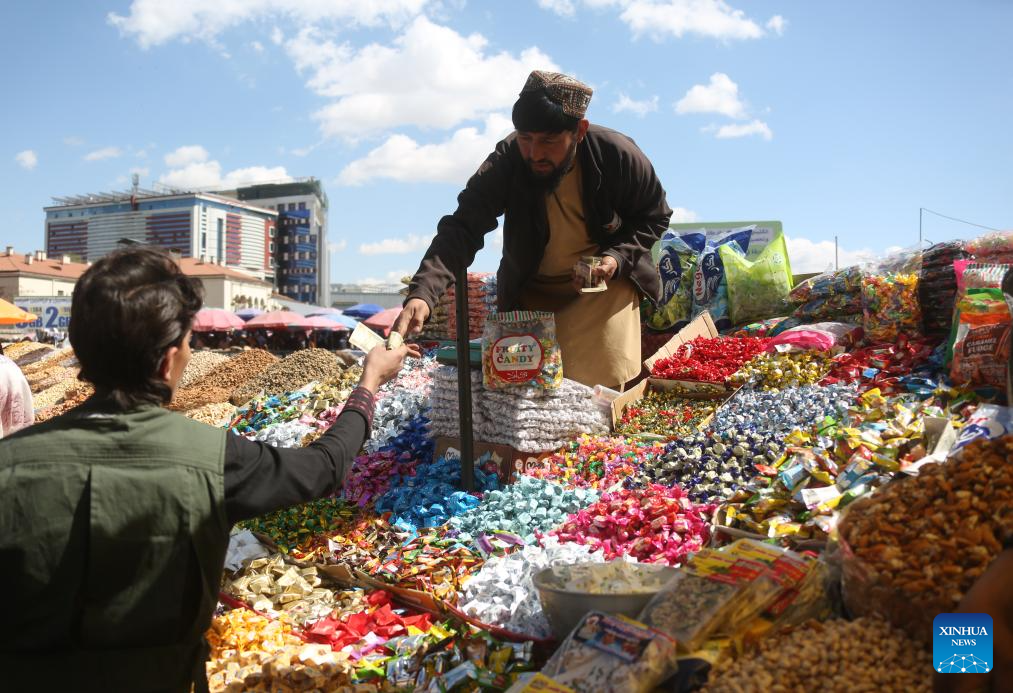
A man shops for the upcoming Eid al-Fitr in Kabul, Afghanistan, March 15, 2026. As the Muslim fasting month of Ramadan nears its end, the people of Afghanistan are preparing themselves to celebrate Eid al-Fitr, marking the end of the holy month with fervor and solemnity. (Photo by Saifurahman Safi/Xinhua)
KABUL, March 17 (Xinhua) -- As the Muslim fasting month of Ramadan nears its end, the people of Afghanistan are preparing themselves to celebrate Eid al-Fitr, marking the end of the holy month with fervor and solemnity.
Afghans traditionally celebrate Eid al-Fitr with dried and fresh fruits, high-quality confectionery, and delicious dishes on the dining table during the three-day Eid festivals to welcome guests.
This year, the war-weary Afghans, as in previous years, are celebrating Eid amid U.S.-imposed sanctions, poverty, and economic hardship. In this post-war nation, the legacy of the 20-year U.S.-led military presence, extreme poverty, is tangible everywhere.
Wandering in a local market to buy dry fruits, Mohibullah Jabarzai lamented that prices are beyond the reach of ordinary people.
Blaming the U.S.-imposed sanctions and the freezing of Afghan assets as the main reasons for the price hike and poverty, Jabarzai said, "the sanctions have undermined everything, ranging from business activities to market prices, and even Afghanistan's relations with other countries."
"Many people cannot afford to buy what they need to welcome Eid because of poverty," Jabarzai said.
"As you know, the majority of our people are jobless, and they cannot buy what they need due to unemployment, price hikes, and economic hardship," Jabarzai, the breadwinner of a seven-member family in Kabul, said while checking prices at a local market.
The United States reportedly has frozen several billion U.S. dollars of Afghan assets following its forces' pullout from the country in August 2021 and the establishment of a new government in Kabul. Washington has also severed relations with the new rulers of Afghanistan and has been mounting pressure on the Afghan government since it took over power more than four years ago.
"The bazaar will change if these assets (the U.S.-frozen Afghan assets) are unfrozen," said dry fruit seller Mohammad Agha.
Agha, 53, who has been running a dry fruit shop for the past 25 years and is the breadwinner of a seven-member family, complained that people have lost purchasing power compared to past years.
"In the past, I often sold 60 sir (each sir equals 7 kg) to 70 sir in the days before Eid, but so far this year, I have hardly sold 20 sir of dry fruits," Agha muttered.
Echoing similar feelings, another Kabul resident and shopkeeper, Mohammad Omar, whispered with distress that feeding a family is a very difficult responsibility nowadays, as the prices of basic necessities are skyrocketing and income is almost zero.
"Business is sluggish and the market is shrinking," Agha said, adding, "Prices are reasonable compared to last year. For example, one kilogram of walnuts cost 800 afghani (12.5 U.S. dollars) last year, but today it costs 500 afghani (7.8 dollars)."
"Prices have dropped compared to last year, but people's purchasing power has faded due to poverty and unemployment," another Kabul resident Omar moaned. ■
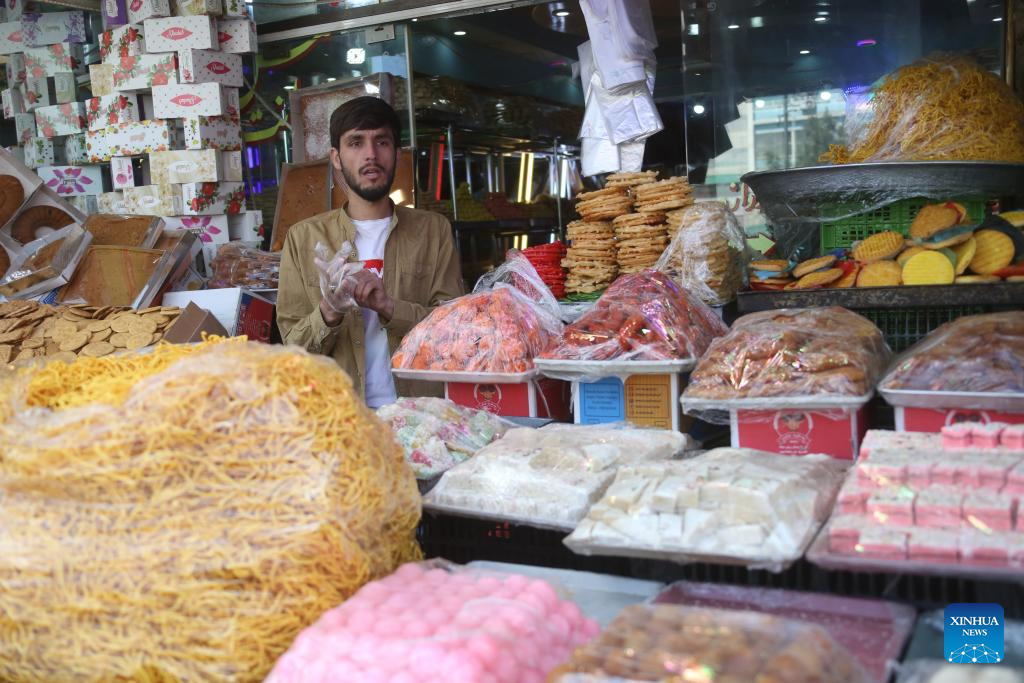
A man sells sweets for the upcoming Eid al-Fitr in Kabul, Afghanistan, March 15, 2026. As the Muslim fasting month of Ramadan nears its end, the people of Afghanistan are preparing themselves to celebrate Eid al-Fitr, marking the end of the holy month with fervor and solemnity. (Photo by Saifurahman Safi/Xinhua)
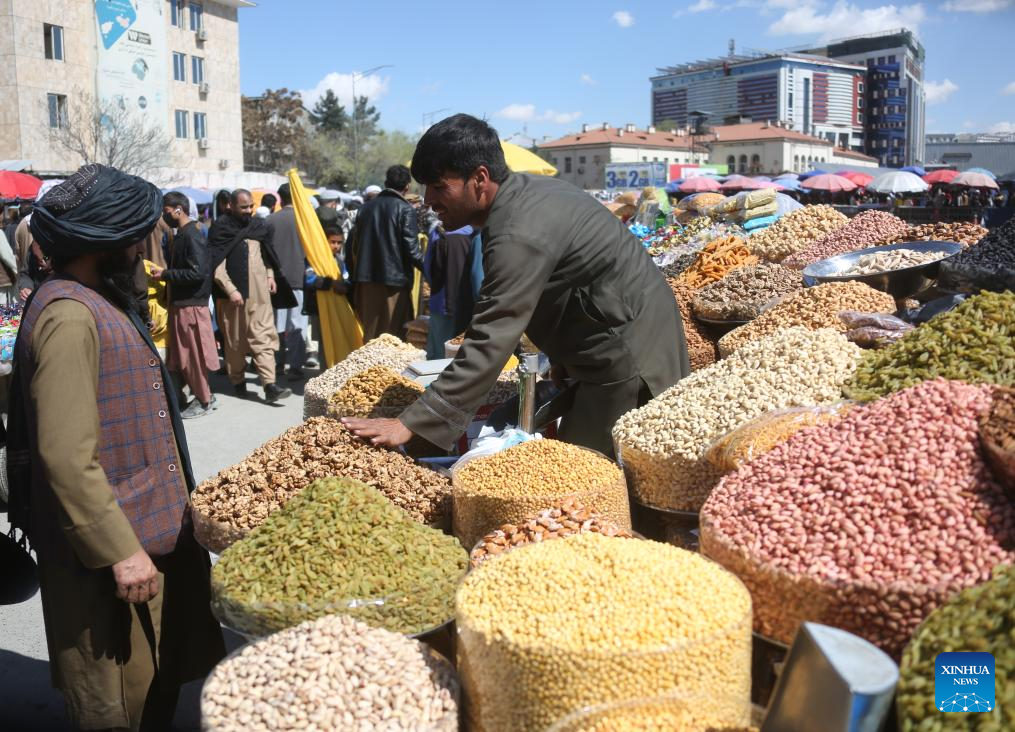
People buy dried fruits and nuts for the upcoming Eid al-Fitr in Kabul, Afghanistan, March 15, 2026. As the Muslim fasting month of Ramadan nears its end, the people of Afghanistan are preparing themselves to celebrate Eid al-Fitr, marking the end of the holy month with fervor and solemnity. (Photo by Saifurahman Safi/Xinhua)


