Feature: Indonesians prepare for Eid homecoming migration

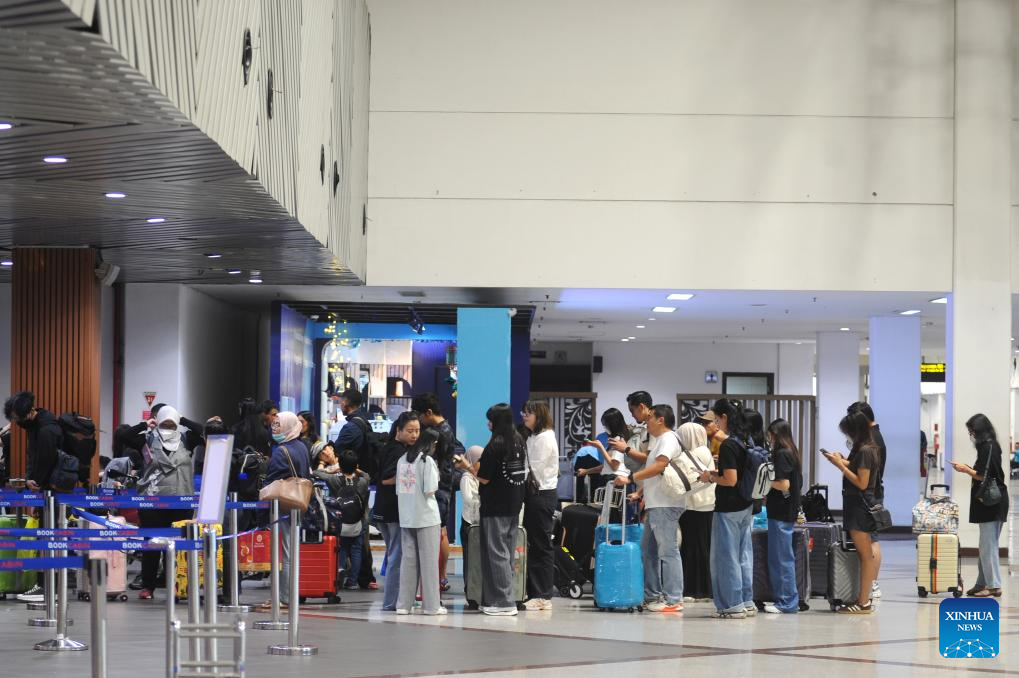
Passengers wait in line before departure for homecoming flights at Juanda International Airport in Sidoarjo, East Java Province, Indonesia, March 17, 2026. (Photo by Sahlan Kurniawan/Xinhua)
by Dames Alexander Sinaga, Nufus Fleurde
JAKARTA, March 17 (Xinhua) -- As dawn broke over Jakarta on Tuesday, the city's streets were already stirring with the quiet tension of an annual ritual. Millions of Indonesians are preparing for mudik, the traditional homecoming pilgrimage ahead of Eid al-Fitr.
This year, Ramadan is expected to end on March 20 or 21, depending on the sighting of the moon, setting the stage for one of the world's largest seasonal migrations in a Muslim-majority country.
Around 28 percent of vehicles had left Jakarta as of Monday, with total outbound traffic projected to reach 3.5 million vehicles amid the annual homecoming ahead of Eid al-Fitr, said National Police Traffic Corps Chief Agus Suryonugroho.
Agus said the number of vehicles leaving the capital is expected to continue rising as the holiday approaches.
For Niniek Rachmawati, a 28-year-old housewife, the journey began early. On Tuesday morning, she boarded one of the Jakarta administration's free homecoming buses at the National Monument (Monas) in central Jakarta, accompanied by her husband and three-year-old son. They expected to arrive in their hometown of Semarang, Central Java, by afternoon.
Inside the air-conditioned bus, families settled in for the long journey. Infants whimpered softly while parents scrolled through travel apps, checking maps and schedules. Volunteers distributed snacks, assisted with luggage, and guided passengers, creating a rare sense of order amid the annual surge.
"It's the first time I've used the free bus program," Niniek told Xinhua. "With the child, safety is my priority. The government service makes this long trip much easier and safer."
The Jakarta administration launched the free homecoming program. Governor Pramono Anung flagged off roughly 700 buses at Monas, carrying some 34,000 passengers to 20 cities across six provinces.
"This year the program has grown significantly," Pramono said. "We aim to ensure residents can travel safely, comfortably, and affordably."
Authorities are urging travelers to depart early and use public transportation to reduce congestion on highways, at train stations, and at airports. During a cabinet meeting last Friday, President Prabowo Subianto instructed ministries and agencies to ensure smooth preparations for Eid, emphasizing the safety and comfort of travelers. The government is also offering discounts on land, sea, and air transportation tickets during the holiday period.
A recent national survey by the Transportation Ministry projected that 143.91 million people, or 50.60 percent of Indonesia's population, will travel during this year's holiday season.
West Java is expected to see the largest movement, with nearly 31 million travelers, followed by East Java and Jakarta. Central Java remains the top destination, with an estimated 38.7 million people returning to their hometowns.
For many commuters, however, speed and convenience outweigh the appeal of a free bus ride. Budi Santoso, a 28-year-old accountant, is preparing for his eighth trip on the Jakarta-Bandung high-speed train, locally called Whoosh, to his hometown in West Java.
Since its launch in 2023, the high-speed line has transformed travel in the region. Budi said the Halim station in eastern Jakarta is conveniently close to his apartment, and the 45-minute ride to Bandung is a fraction of the three-hour shuttle bus journey he once endured.
"The high-speed train makes everything more efficient, from location to travel time," Budi said. "It is also very comfortable, clean, and quiet. It is really worth the price." He booked his ticket weeks in advance to travel on Wednesday.
Meanwhile, Aisyah Aqilah, a 19-year-old university student in Bandung, will take the high-speed train to her hometown in Bekasi, on the outskirts of Jakarta.
"I've tried it a couple of times, and it's very comfortable and time-efficient," she said. "That is why I prefer it for the Eid journey. I think I'll keep taking this train every time I go home."
Across Jakarta, the mix of government buses and high-speed trains illustrates how Indonesians navigate the annual mudik exodus. Families balance affordability, comfort, and speed, with travel shaped by a combination of personal priorities and public programs.
From the bustling streets of Jakarta to the clean carriages of high-speed trains, the annual pilgrimage is more than a mass movement of people. It reflects Indonesia's enduring family traditions, the integration of public services into daily life, and the resilience of millions navigating one of the busiest travel periods in the world. ■
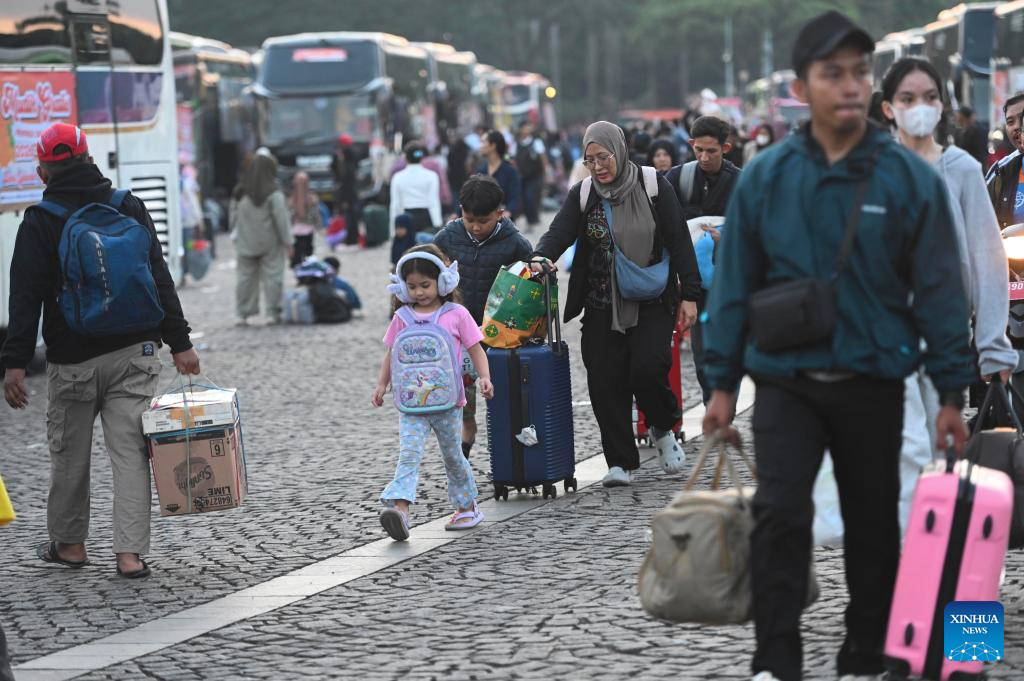
Passengers prepare to board Jakarta administration's free homecoming buses at the National Monument (Monas) in central Jakarta, Indonesia, March 17, 2026. (Xinhua/Zulkarnain)
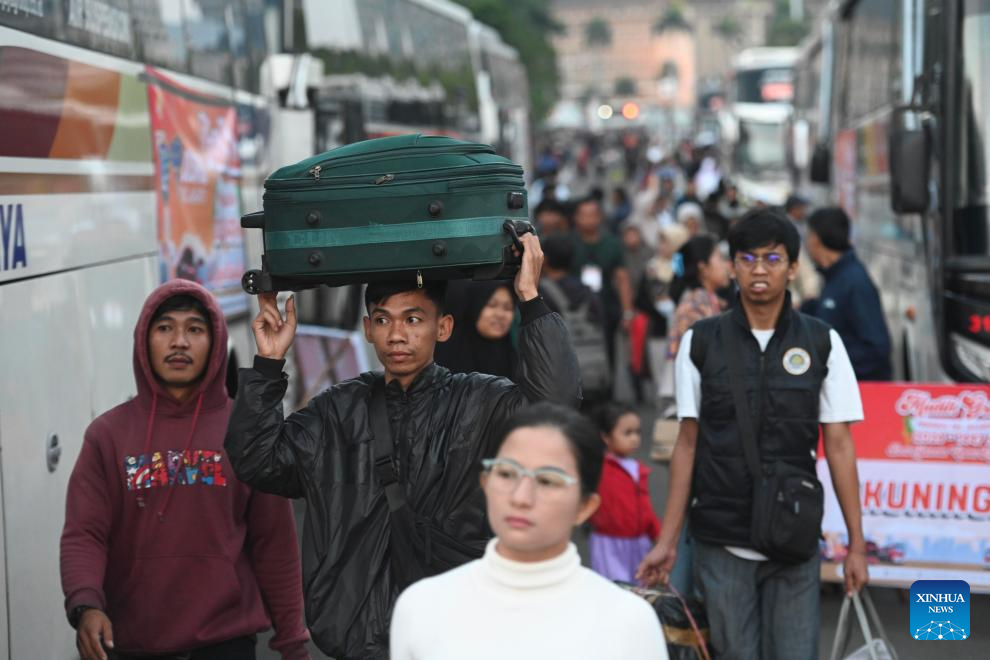
Passengers prepare to board Jakarta administration's free homecoming buses at the National Monument (Monas) in central Jakarta, Indonesia, March 17, 2026. (Xinhua/Zulkarnain)


